Why Most People Lose Money in Crypto (And How to Avoid It)
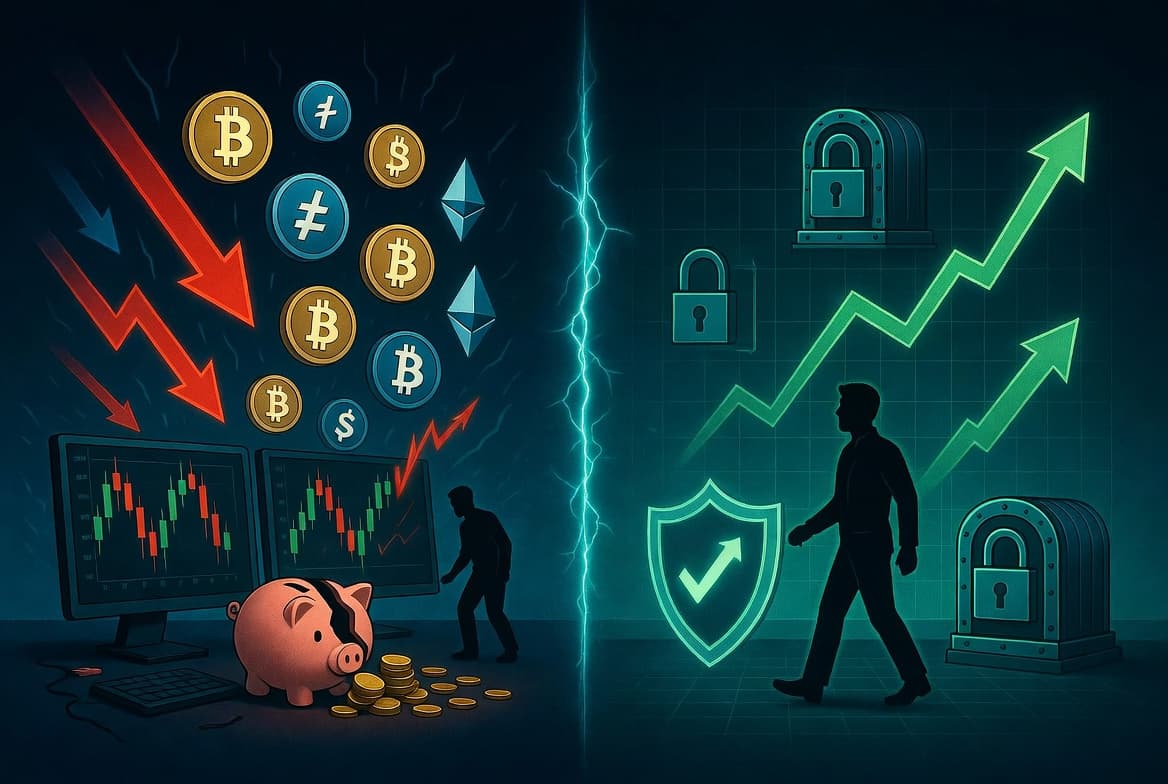
The technology gets the headlines, but most crypto losses come down to human behavior. Here are the real reasons people lose money in crypto, and the mindset shifts that help you avoid the same traps.
There is an uncomfortable truth that does not get said often enough in crypto: most people who enter the market end up losing money. Not because the technology is fake, and not because crypto is a scam, but because of how they behave once they get involved. The losses are rarely about the coins themselves. They are about decisions, emotions, and habits.
The encouraging side of this is that if most losses come from behavior, then most losses are avoidable. You cannot control whether the market goes up or down, but you can control how you act. This article walks through the real reasons people lose money in crypto, and the mindset shifts that separate those who survive from those who get burned. Consider it less of an investing tutorial and more of an honest conversation.
They buy because of hype, not understanding
The most common path to losing money starts with buying something you do not understand because everyone else seems excited about it. A coin is trending, your friends are talking about it, social media is full of people claiming they are getting rich, and the fear of missing out takes over. You buy without really knowing what the project does or whether it has any value.
The problem is that hype is often loudest near the top. By the time something is all over your feed, the easy gains may already be gone, and you risk becoming the person who buys high right before the excitement fades. Understanding what you are buying, even at a basic level, is one of the simplest protections against this.
They let emotions drive decisions
Crypto markets are extraordinarily volatile, and volatility is an emotional pressure cooker. Prices can swing wildly in a single day. This triggers two powerful and destructive emotions: greed when prices are rising, and fear when they are falling.
Greed makes people pour in more than they can afford when things look unstoppable, convinced the rise will continue forever. Fear makes those same people panic-sell at the bottom when prices crash, locking in losses right before any potential recovery. The classic, painful pattern is buying high out of excitement and selling low out of panic, the exact opposite of what works. The market does not punish you for being wrong nearly as much as it punishes you for being emotional.
They invest more than they can afford to lose
This one sounds obvious, yet it is violated constantly. People hear stories of others making life-changing money, and they decide to go all in. They invest money they actually need, sometimes even borrowed money, betting on an outcome that is far from guaranteed.
When you invest money you cannot afford to lose, two bad things happen. First, the financial damage of a downturn is severe and real. Second, and just as important, you make worse decisions, because fear and desperation take over. Investing only what you can genuinely afford to lose is not just about protecting your finances. It protects your judgment, which is arguably more valuable.
They chase quick riches
A lot of people come to crypto expecting to get rich fast. This mindset itself is a major source of losses, because it pushes people toward the riskiest bets: tiny unknown coins promising massive returns, the latest hyped launch, anything that seems like it could multiply quickly.
The trouble is that the same things that could go up fast can collapse just as fast, and many do. Chasing quick riches usually means taking on enormous risk while underestimating it. The people who tend to do well over time are, ironically, the ones who are not in a hurry. They think in years, not days.
They fall for scams and traps
Crypto is full of bad actors, and people who do not know the warning signs walk right into them. Guaranteed-return schemes, fake giveaways, impersonators posing as support, projects with anonymous teams and no real product. We have covered these elsewhere, but the underlying point is that a meaningful share of losses comes not from bad investments but from outright traps that could have been spotted with a little caution.
The defense is knowledge and skepticism. If something promises guaranteed profits, pressures you to act immediately, or asks for your private keys, it is a scam. Learning to recognize these patterns prevents a whole category of losses.
They never have a plan
Many people enter crypto with no plan at all. They do not know why they are buying, what they expect, when they would sell, or how much risk they are willing to take. Without a plan, every decision is made in the moment, driven by whatever the market and their emotions are doing right then.
A plan does not need to be complicated. Knowing roughly why you are investing, how much you are willing to put in, and what you would do if prices fell sharply gives you something to hold onto when emotions run high. People without a plan tend to react. People with a plan tend to respond. That difference adds up enormously over time.
How to avoid being part of the statistic
The good news running through all of this is that the main causes of loss are within your control. A few principles go a long way.
Invest only what you can afford to lose, so that no single outcome can hurt you badly or cloud your judgment. Take the time to understand what you are buying instead of chasing hype. Expect volatility and decide in advance how you will react, so that swings do not trigger panic. Be deeply skeptical of anything promising guaranteed or fast riches. Learn the common scams so you can spot them. And give yourself a simple plan rather than making every decision on impulse.
None of this guarantees profits. Crypto is genuinely risky, and even careful, disciplined people can lose money. But these habits dramatically shift the odds in your favor and, just as importantly, keep you from making the catastrophic mistakes that wipe people out.
The bottom line
Most people lose money in crypto not because of the technology, but because of how they behave: buying on hype, acting on emotion, risking too much, chasing quick wins, falling for scams, and operating without a plan. Every one of these is a behavior, and every behavior can be changed.
The investors who last are rarely the ones who found the perfect coin. They are the ones who managed themselves well: patient, skeptical, disciplined, and honest about risk. In a market this emotional, that self-control is the real edge. Master it, and you have already avoided the most common reasons people lose.
This article is for educational purposes only and does not constitute financial advice. Always do your own research before making any investment.